
How to Protect Yourself from Pickpockets in Pattaya
Last Updated on February 10, 2026 by admin
While Pattaya, Thailand is generally safe compared to major tourist destinations worldwide, pickpocketing still occurs in predictable locations and situations. Understanding where thieves operate and how they work helps you stay one step ahead without becoming paranoid about your surroundings.
High-Risk Areas in Pattaya
Certain locations attract pickpockets because of crowd density and tourist distraction. Walking Street tops the list. The pedestrian-only nightlife strip becomes extremely crowded between 10:00 PM and 2:00 AM, especially on weekends. In December 2025, two transgender women were arrested for pickpocketing an Israeli tourist on Walking Street, charged with nighttime theft which carries penalties of one to five years in prison and fines ranging from 20,000 to 100,000 baht. But the point is to not become a victim to begin with.
The baht bus system presents another vulnerability point. These open-air pickup trucks get packed during peak hours, with passengers pressed together on two facing bench seats. The jostling and bumping as people enter and exit provides perfect cover for skilled pickpockets. I’ve never personally experienced theft on a baht bus, but the crowded conditions create opportunity.
Beach Road during busy afternoons sees heavy foot traffic with tourists distracted by vendors, sunset views, and photo opportunities. Soi 6 when crowded during evening hours presents similar risks. Any location where you’re surrounded by strangers in close proximity while your attention is divided increases vulnerability.
Soi Buakhao gets crowded at night, being a one-way street with no sidewalks. Be aware of your surroundings at all times.
Common Distraction Techniques
Professional pickpockets rarely work alone. Understanding their distraction tactics helps you recognize threats before they succeed.
The bump and grab remains the oldest trick. Pickpockets working in teams apply distraction such as asking a question or bumping into the victim. Someone collides with you, apologizes profusely, and while you’re focused on the interaction, their accomplice lifts your wallet.
Fake spills create chaos that thieves exploit. Someone might “accidentally” spill a drink on you, drop a bag of items, or bump into you so forcefully that you lose balance, and while you focus on cleaning up or reacting, an accomplice could take your valuables. The person who caused the mess often acts apologetic or tries to help, giving them even more access to your personal space.
Petition scams involve someone approaching with a clipboard asking you to sign something. As you engage with them and consider signing, they use the clipboard as a shield that blocks your line of sight to your purse or bag, which they or an accomplice can then access undetected.
Foreigners asking for directions or striking up conversations serve as distractors. They may approach holding a map and asking for directions, request help signing a petition, or show you an item while speaking quickly, keeping your eyes and hands busy while an accomplice targets your valuables.
Staged arguments or performances draw crowds of distracted onlookers. While everyone watches the show, pickpockets work through the audience taking advantage of divided attention.
Basic Defense Strategies
Simple precautions dramatically reduce your pickpocketing risk without requiring constant vigilance or expensive anti-theft gear.
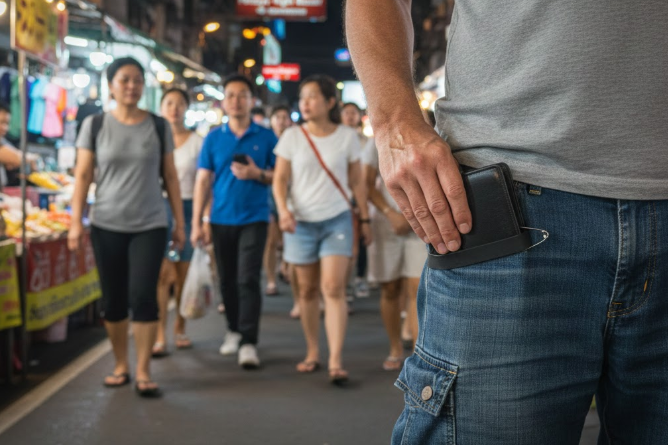
Keep your wallet in your front pocket, never your back pocket. This single change eliminates most casual theft attempts. Push the wallet all the way down so it sits at the bottom of your pocket. A visible bulge or protruding corner screams “easy target” to anyone looking.
Switch to a slimmer wallet before traveling. Those thick leather wallets stuffed with receipts, loyalty cards, and business cards create obvious bulges that advertise their presence. In case you do get pickpocketed anyway, bring only enough cash for one day and one or two credit cards. Distribute your valuables across multiple locations. Keep some cash and a backup credit card in your luggage at the hotel.
Some carry a decoy wallet in their back pockets with expired cards and a small amount of cash. If a pickpocket takes it, no worries. However, I don’t recommend this approach. Why make yourself a target at all?
Protecting Your Wallet in Crowds
Crowded situations require heightened awareness and active protection measures.
Keep your hand in or over your front pocket when navigating dense crowds. This doesn’t mean walking around clutching your pocket paranoia, but in obvious high-risk moments like boarding a packed baht bus or squeezing through Walking Street crowds, a hand resting casually over your pocket prevents access. I like to keep my phone and my wallet in the same front pocket and my hand in or over my pocket in crowded areas. The added friction of a phone and wallet can help, since pickpockets rely on being to smoothly lift your wallet. Many wallets are smooth.
After any unexpected bump or collision, immediately do a quick check. Feel for your wallet without making a big show of it. This takes two seconds and could save you hours of hassle if something is missing.
Create space when strangers crowd you unnecessarily. If you notice the same person staying directly behind you in a line, on an escalator, or while walking through a crowd, they may be positioning themselves to reach your pockets or bag. Step aside, let them pass, and reposition yourself with better sight lines.
Decline help from overly friendly strangers in crowded areas. While most people offering assistance are genuine, overly helpful strangers at ticket kiosks might not have your best interests at heart, as the “helpful” local might be working with an accomplice who reaches into your bag while you’re paying attention to the ticket machine.
Understanding Accomplice Operations
Pickpocket teams work with defined roles that make their operations more effective than solo thieves.
A typical crew includes the Stall (Distractor who creates the diversion), the Tool (Extractor with quick hands who does the actual picking), the Shade (Lookout who watches for trouble), and the Mule (who carries and hides the loot after the grab).
This team structure means the person who bumped you probably isn’t the one who took your wallet. By the time you realize something is missing, the thief has already passed your belongings to another team member who has disappeared into the crowd.
What to Do If Pickpocketed
Despite precautions, theft sometimes occurs. Quick action limits damage.
Contact Thai Tourist Police immediately at 1155. They specialize in helping foreign visitors and can file reports needed for insurance claims.
Call your bank to cancel credit cards before thieves can use them. Most banks have 24-hour international fraud lines printed on the back of your card or available through their mobile apps.
Check nearby security cameras. Many businesses along Walking Street and major areas have CCTV that might have captured the incident. Police can review footage if you report the theft quickly.
File a police report even if you don’t expect to recover your belongings. Insurance companies require official documentation to process claims.
Final Thoughts
Pattaya’s pickpocketing risk remains low compared to European tourist hotspots like Barcelona or Rome. I’ve never been pickpocketed here, and most travelers never experience theft. The key is maintaining basic awareness without letting security concerns ruin your Pattaya experience.
Front pocket wallet placement, minimal carrying, and attention during crowded moments provide adequate protection for the vast majority of situations. Save your paranoia for cities where pickpocketing represents a genuine daily threat. In Pattaya, simple precautions and street smarts keep you safe while you enjoy everything the city offers.
For more safety tips, check out our article How to Stay Safe in Pattaya.



Pingback: How to Stay Safe in Pattaya: Essential Tips for Travelers - Pattaya Guidebook